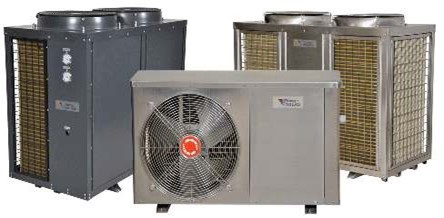
A heat pump is one of the most effective ways to heat or cool a building using renewable energy. Unlike many
other forms of renewable energy that depend on the sun shining or the wind blowing the energy for the heat
pump is always available. Heat is widely available in the ground, air and water around your house. These natural
sources of heat are constantly replenished by the sun, wind and rain. A heat pump system will harness these free
and renewable energy sources for heating your house and supplying hot water at a very low cost.
Annual Costs of Heating Systems Independent studies state that heat pumps are cheaper and more efficient
than fuel oil, gas and wood pellet heating. However attention to detail on the installation is critical to success.
The heat pump has the ability to extract heat from one source (i.e. ground or air) and discharge it into another
(i.e. underfloor or radiators).
How a Heat Pump works
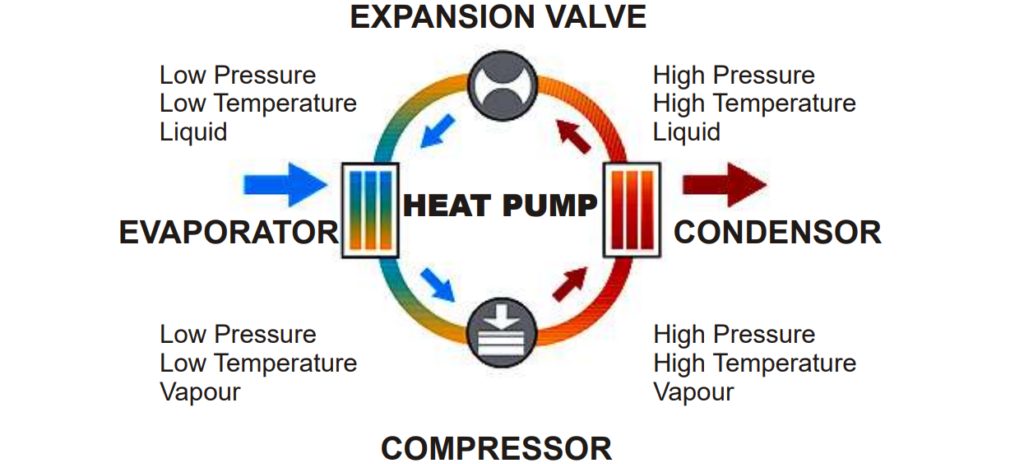
The heat pump works on the same characteristics as a standard domestic fridge but, instead of cooling, it
heats. Heating and cooling are achieved by moving a refrigerant through various indoor and
outdoor coils and components. A compressor, condenser, expansion valve and evaporator are used to
change the state of refrigerant from a liquid to a hot gas and from a gas to a cold liquid.
Heat Pump efficiency
Heat pump efficiency (COP) is obtained by comparing how much energy it consumes in order to complete the
heating and cooling cycle. Coefficient of performance (COP) defined as: ‘The ratio of heat delivered by the heat
pump and the electricity supplied to the compressor’
Electricity is needed to power the heat pump, but for every unit of electricity used, it will generate 3 to 6 units of
useful heat, largely dependant on output temperature.